
THE IMPLICATIONS IN INTERNATIONALING AND LOCALIZING THE DISCOVERER – A TRAVEL GUIDE AND BLOGGING PUBLICATION
The Discoverer is a fast-growing modern travel publication, boasting a thriving community of over 4.5 million avid travelers. It curates an authentic and immersive content experience, releasing weekly editions that shine a spotlight on global cities and a blog featuring personal narratives, insider tips, and distinctive discoveries. Catering to a highly engaged audience, it is particularly active on Instagram. It has a sleek, minimalist layout and showcases stunning photography predominantly sourced from its members.
While The Discoverer serves as an excellent travel guide with considerable potential for wider reach, its membership predominantly comes from the United States, and its content is only available in English. Considering it’s potential success beyond borders, we wondered how we could make this modern, slick, aesthetically thoughtful, and highly connecting platform reach new heights and publics by having its content localized into two new languages: Brazilian Portuguese and Japanese.
so how does a trip to hawaii sound to you?
our mission:
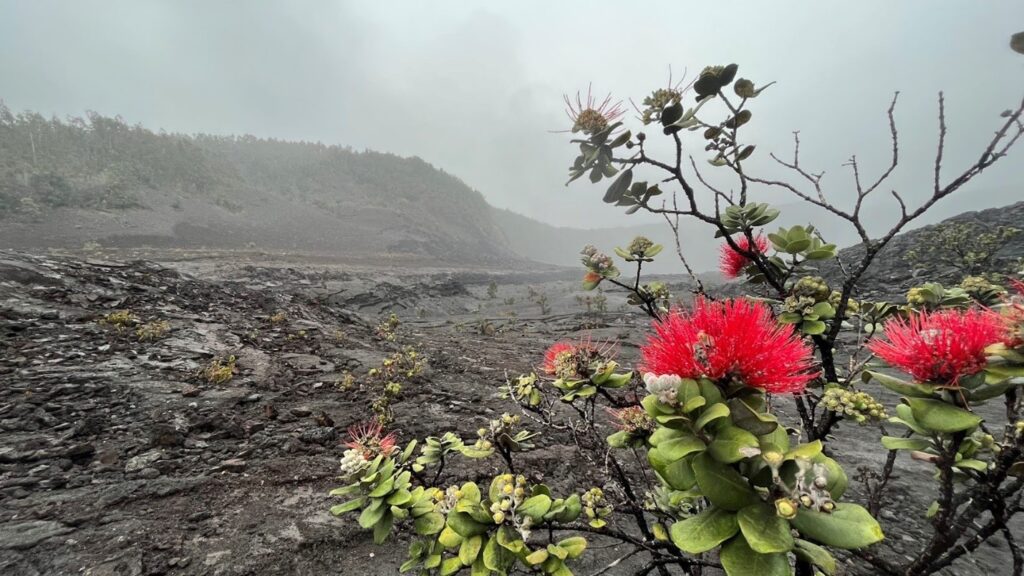
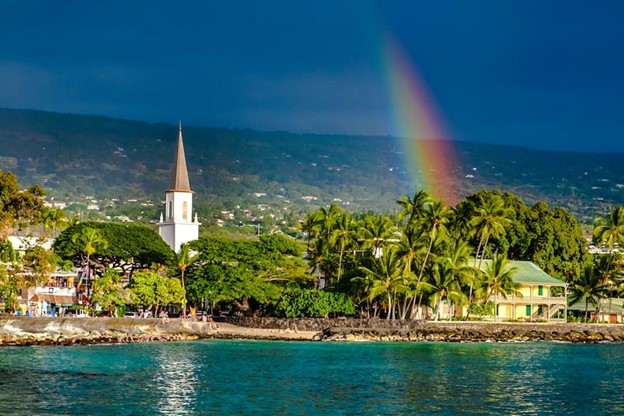
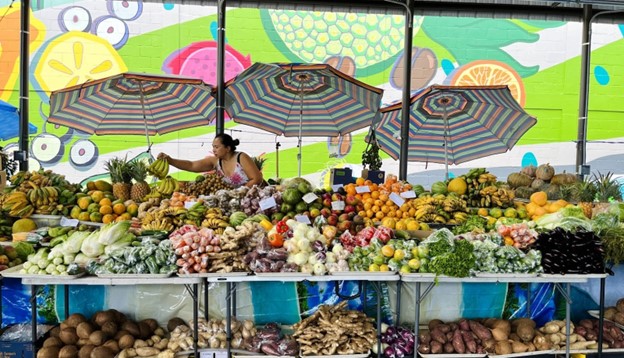
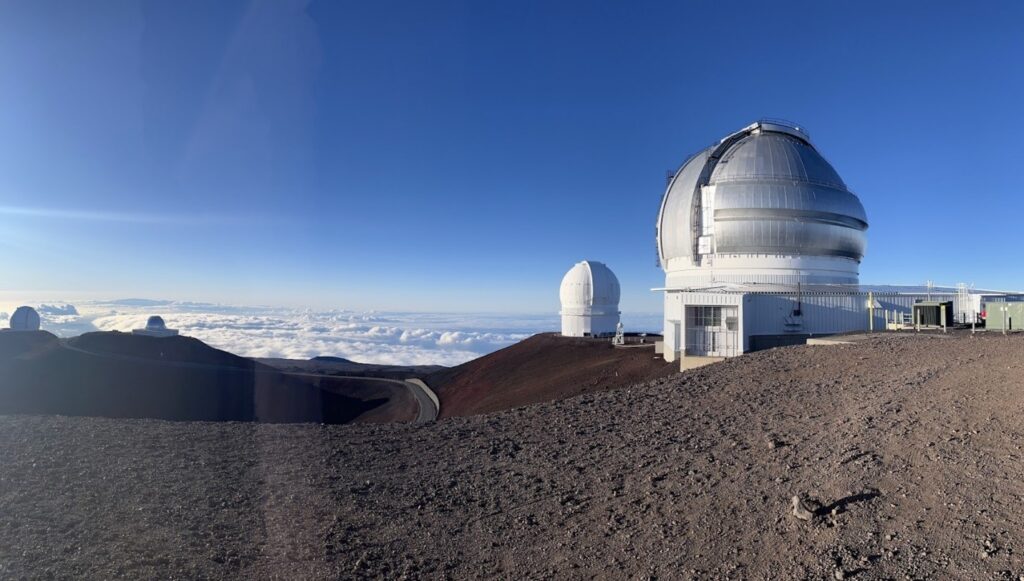
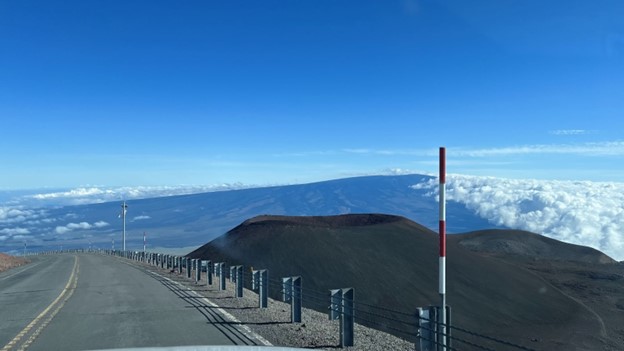
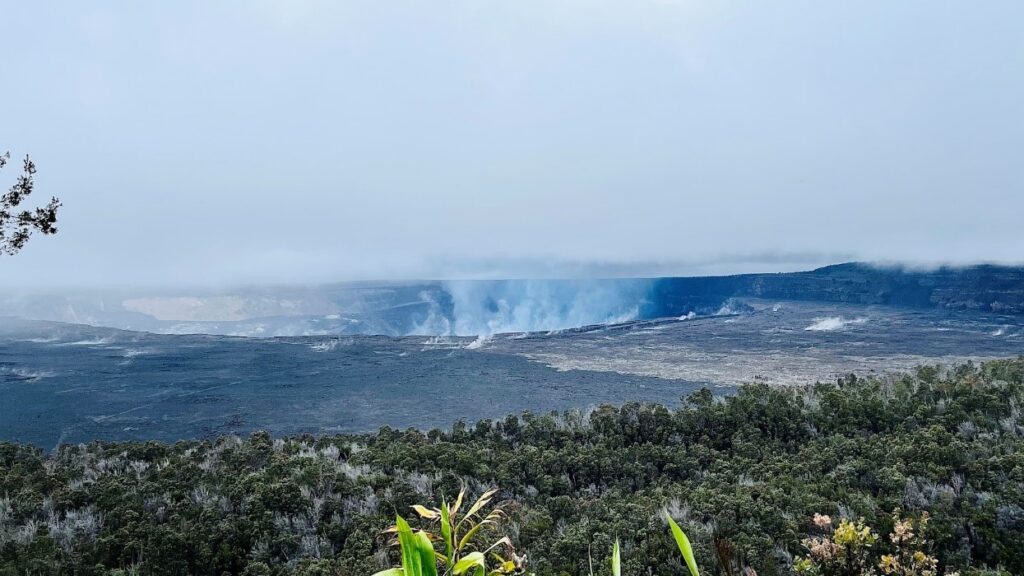
To demonstrate the potential of this approach, my partner Anne Tran and I decided to study the possibility of offering internationalization solutions to the website and localize it into two languages as a demonstration. We also decided to create one of The Discoverer’s travel editions with our own original content maintain the editorial style, aesthetics and format. We provided mostly our own images (that I have taken myself on a trip to Big Island, Hawaii, when I was a resident for a couple of years). Although The Discoverer offers more than 150 editions, this destination would be a new one for their archives.
website analysis
In order to run a more in depth analysis of how that goal could be accomplished, we inspected the original code to underhand its peculiarities and formulate solutions with our goal in mind. We found some interesting considerations and challenges:
- Website structure: The Discoverer organizes its destinations in illustrative and comprehensive sections in each “Edition”, where writers could contribute on the topics. The layout was standardized for all destinations – “when to go” , “discoveries”, “what to eat”, “stay here” blocks with photos connected to Instagram accounts of their members, and a navigation site (Google Maps).
- Connectivity to members: All images in every single editorial is connected to a member’s Instagram account. You have access to them as you hover over the image and click to follow the link.
- Node.js : The Discoverer was build in Node.js
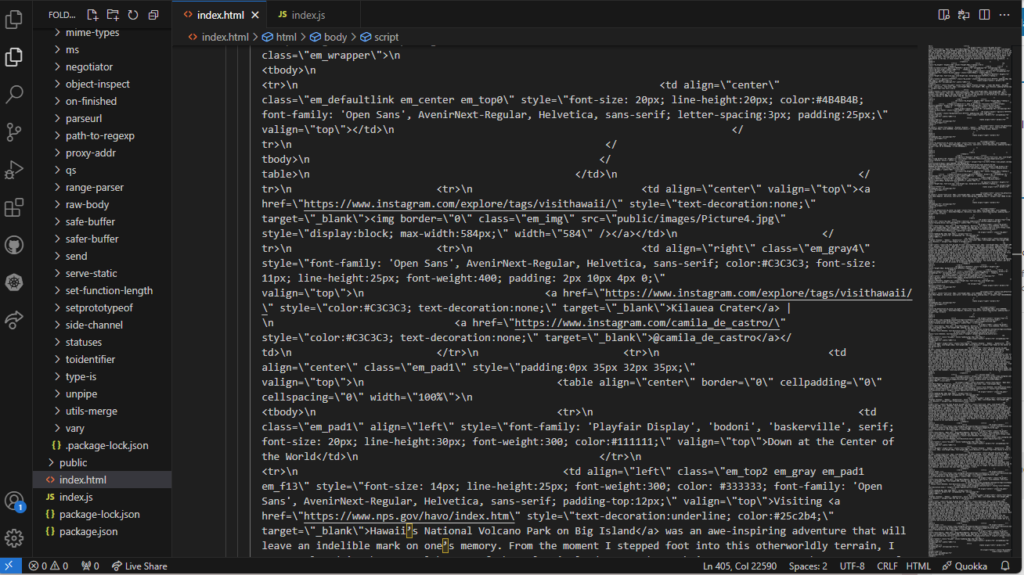
- Some of the texts were actually embedded into photos: Not all texts in the editorials were text strings. In the “When to Go” and “Discoveries” sections, for instance, the text was an image that would need to be extracted into a string of same exact formatting to be localized.
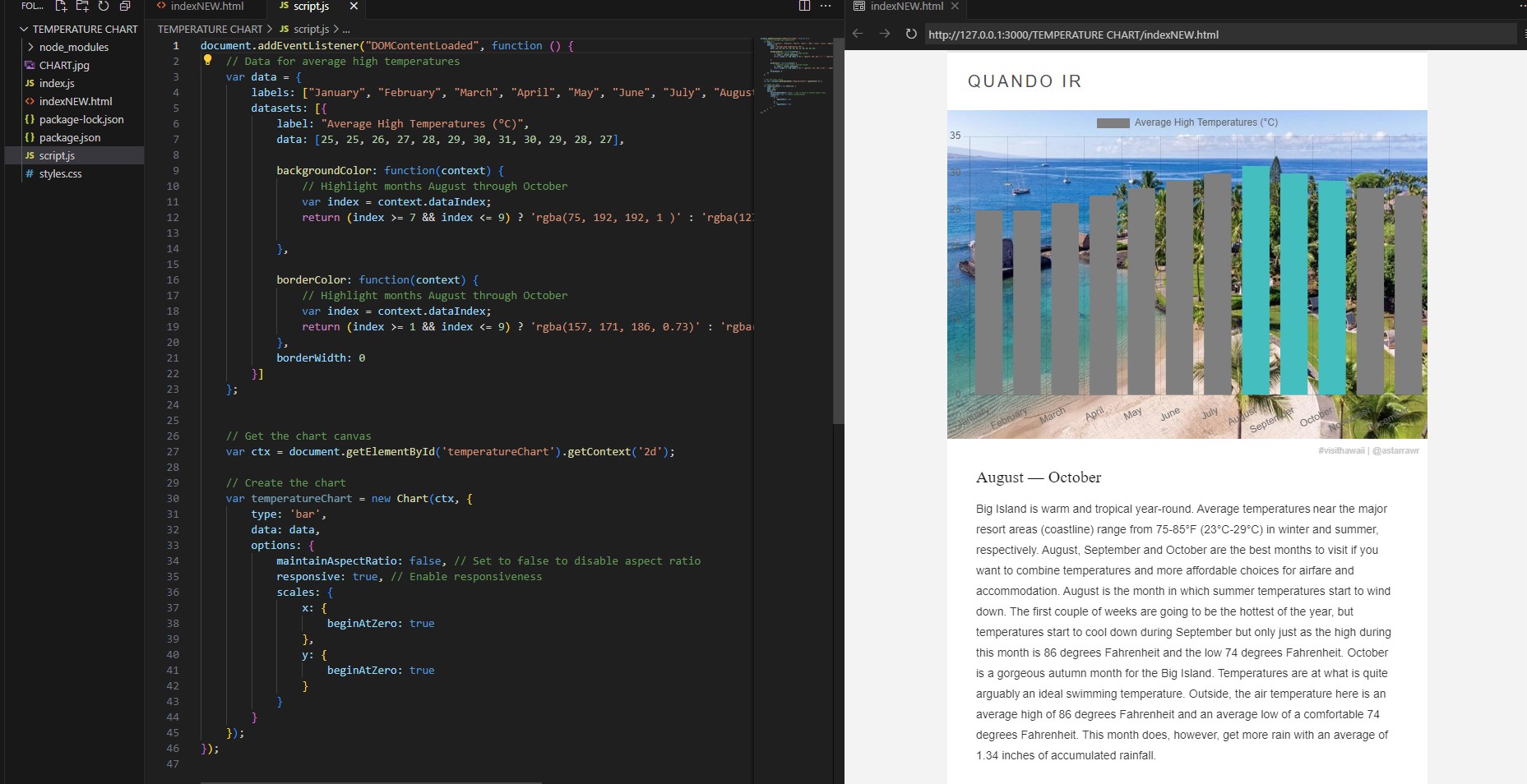
- Temperature Graph: an interesting feature on all editions (destinations) was an informational graph about the best time of the year for a visit based on temperature. This graph and information was also a simple image of a graph with a photo of that particular destination in the background.
METHOD OF WORK
We then stablished a method of work to follow in the pursuit of executing our vision:
1. preservation of ORIGINAL Code:
Although we were recreating an editorial for this website, we chose not to change their choice of CMS. We wanted to sustain the argument that if we were to offer this proposal in real life, attempting to transfer their massive amount of content to a different CMS would be too costly and laborious. So we extracted one editorial to work with for this project.



2. Creation of original content:
As we decided to provide original content for this project we had to succeed in preserving its original aesthetics, features BEFORE localization. Most photos were from my own personal gallery.
With Big Island, Hawaii as a topic of choice, it’s fair to say it offered more than enough inspiration for the creation of this editorial.
3. Integration of original content for localizalion
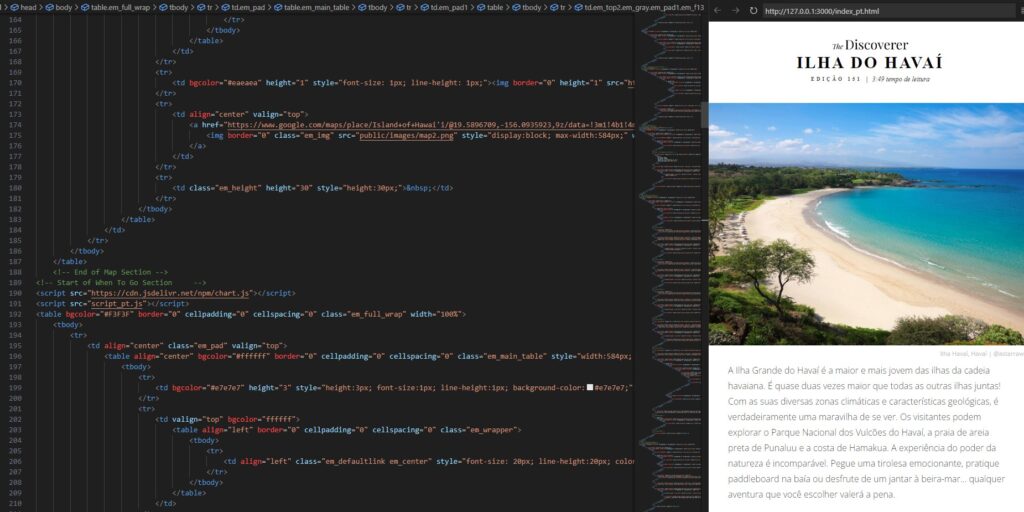
Inserting our content into the original files and code as they were proved to be a detail oriented and careful process. The ability of doing so without corrupting the code in a compromising way was an exercise of patience and focus, trial and error. It would be important to place all the correct images and links to showcase a brand new content while maintaining all the formatting and features of its original.
4. GRAPH INTERACTIVITY: the star of the show
As the central piece of this case study: we focused on the “when to go” informational graph that appears in all website editions. This interesting feature caught our attention for the potential to offer not only more interactivity to readers but also more relevant information than its original. It would be an additional challenge to localization, but an interesting one.
the ISSUES FOUND in original
- Texts that were embedded in image only. They needed extraction for text string creation and reintegration into the code;
- Static background photo needed to be substituted;
- Limited information.
Recognizing the potential advantages of such an achievement, we decided to incorporate a new graph into our localized website. This graph aimed not only to depict temperatures throughout the entire year, extending beyond the scope of merely indicating the “best time to go,” but also to offer localized information that would dynamically appear upon hovering over the graph bars. Using chart.js, we meticulously crafted a temperature graph that closely mirrored the original, and offered a seamless integration of comprehensive data and enhancing the user experience.
the SOLUTIONS
LET’S CREATE A NEW FEATURE!
- Extraction of the texts from image and recreation of chart with localizable texts.
- Creation of interactive temperature graph with chart.js
- Integration of new chart into code.
SHIFT IN COURSE
In our pursuit of unraveling the possibilities the internationalization process through the lens of globalize.js and polyglot.js, we encountered a distinctive challenge rooted in the original code’s unique built. It raised our awareness about how such task would have to consider the reconstruction of the original site in a more favorable way for the international market. While the envisioned demonstration of a seamless integration may not have materialized in this instance, our goal evolved into a compelling confirmation of our case study’s core objective. At the onset of our process, we successfully pivoted towards an alternative approach that still illustrated the vision of a final, localized product that, in addition, displays a creative, interactive new feature that would not only benefit the original content but also fit seamlessly into The Discoverer’s concept of interactivity and style.
5. LOCALIZATION PROCESS:
My partner and I then translated and reviewed all the language content and successfully reintegrated it into the files for demonstration in a local server. Our new chart was also shinning bright and successfully included in the localization results!
Japanese localized Edition – (chart integrated)
Portuguese localized Edition (chart integrated)
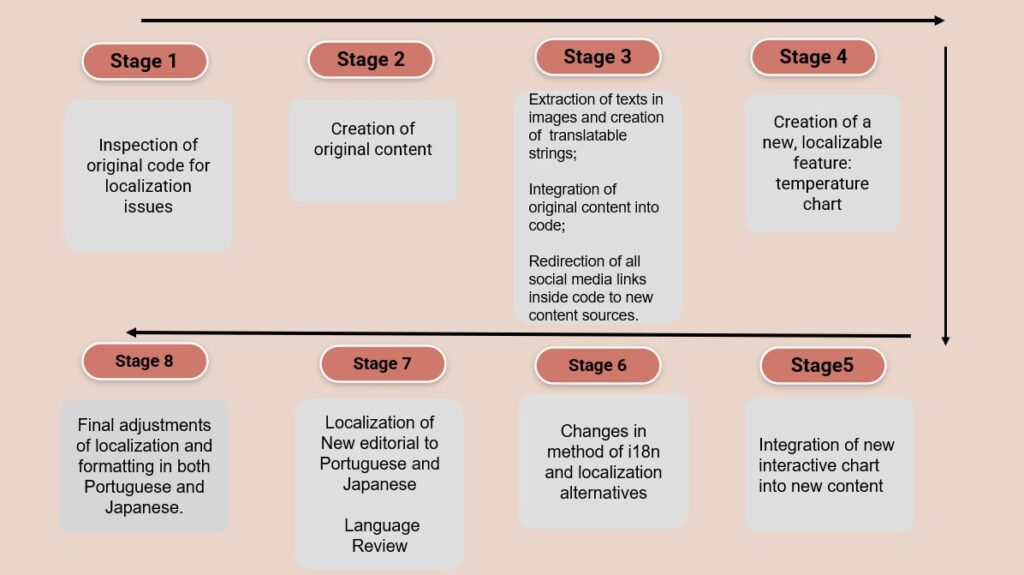
work flow
Lessons learned and final thoughts
Internationalization Viability: Some websites inherently lack readiness for the internationalization process due to their original construction. When internationalization considerations are not integrated from the inception of development, the ensuing process becomes excessively labor-intensive and cost-prohibitive.
Chart.js Solution: The goal of enhancing our website led us to Chart.js, providing a pragmatic solution to our objectives. Creating a new, interactive chart closely resembling the original one offered challenges, especially in seamlessly integrating it into the content code. Adjustments of configuration and the meticulous incorporation of a background photo to precisely mirror the static graph was a trial-and-error process. Despite the complexities, this task offered great opportunities for gaining proficiency in handling extensive HTML files and understanding JavaScript language.
Strategic Planning: Reevaluating workflow methodologies from diverse perspectives and adapting to evolving goals proved to be an invaluable exercise. This strategic flexibility not only ensured continued progress but also allowed the application of previously acquired knowledge to thrive in the face of ongoing challenges.
Embarking on the task of internationalizing and localizing a robust website like The Discoverer unfolded as a priceless opportunity to not only assess acquired skills but also to cultivate new ones. The refinement of our analytical processes, collaboration as a team, strategic reassessment of challenges, and the pursuit of imaginative solutions to the myriad issues encountered have collectively transformed this case study into an experience that will certainly show its value in the near future. The personal and professional bonds also formed throughout this collaboration are treasures I will nurture. Undoubtedly, the offer of internationalization solutions is a sophisticated and indispensable skill, dependent not only on technical expertise but also capable of inciting profound creativity and satisfaction. This was a pivotal milestone in my journey as a localization professional, and will reinforce the confidence to confront forthcoming challenges and deliver bigger and better results.
Copyright Disclaimer: under section 107 of the Copyright Act of 1976, allowance is made for “fair use” for purposes such as criticism, comment, news reporting, teaching, scholarship, education, and research. This project is a proof-of-concept, and as such does not represent nor infringe on the creator(s) in any way.